
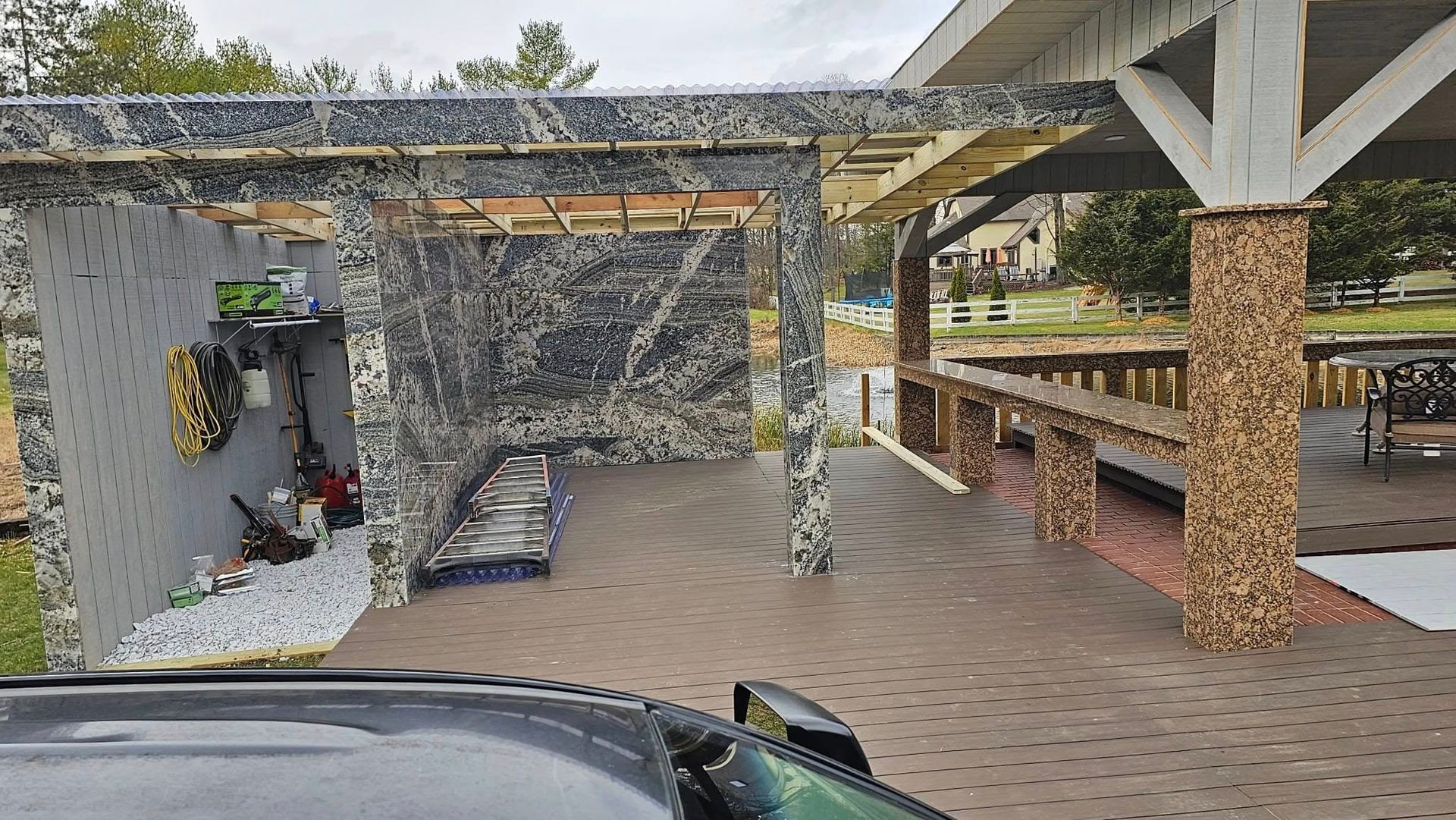
Outdoor Structures Designed for Ohio Weather Cycles
Deck & Porch Construction in Columbus for residential properties needing durable outdoor entertaining spaces that handle freeze-thaw conditions
Columbus freeze-thaw cycles cause improperly built decks to shift, crack, or separate from the house as frost heaves footings and moisture penetrates wood that wasn't sealed or flashed correctly. Homeowners in Columbus, Gahanna, Pickerington, and surrounding areas add decks to single-family properties built between the 1980s and 2010s, where original outdoor space consists of small concrete slabs or no elevated structure at all. Kips Home Solutions LLC builds residential decks and porches with ledger attachments that prevent water from wicking into rim joists, post footings set below the frost line to avoid seasonal movement, and deck board selection that resists cupping and splitting after years of sun and snow exposure.
Construction starts with digging post holes deep enough that footings sit below the frost line—typically 32 inches in central Ohio—which prevents heaving when ground freezes and thaws each winter. Ledger boards get attached to the house with lag bolts and metal flashing that sheds water away from the structure, and deck boards are spaced to allow drainage while preventing debris buildup between gaps.
Schedule a property assessment to evaluate your yard slope, existing door height, and setback requirements before construction begins.
Why Proper Drainage and Material Selection Prevent Long-Term Deck Failures
Deck construction involves more than cutting lumber and driving screws—it requires flashing the ledger board so water doesn't rot the rim joist behind it, spacing joists to prevent sagging under furniture and foot traffic, and selecting deck board material that won't warp after Ohio's winter moisture and summer heat cycles. Pressure-treated lumber works for framing, but boards exposed to weather need proper sealing or composite material that resists moisture absorption.
After construction finishes, you'll notice boards that stay flat without cupping at the edges, a structure that doesn't shift or squeak when weight moves across it, and flashing that keeps water from staining the house siding where the deck attaches. The surface drains quickly after rain, and gaps between boards don't collect leaves or debris that would trap moisture and accelerate rot.
The build includes setting posts in concrete footings, attaching joists with metal hangers rather than nails alone, and applying a water-repellent finish to exposed wood surfaces before the deck goes into service. For properties with grading issues, footings get adjusted so the deck stays level even when the yard slopes away from the house.
Answers to Frequent Deck and Porch Questions
Homeowners planning outdoor structures want to understand material durability, construction timelines, and how local conditions affect the build.
What deck material holds up best in Columbus weather without constant maintenance?
Composite decking resists moisture, doesn't require annual sealing, and won't splinter or crack like untreated wood, though pressure-treated lumber with proper finish coats performs well if maintained every few years.
How deep do deck footings need to be to avoid frost heave in Ohio?
Footings must extend at least 32 inches below grade, which puts them below the frost line and prevents seasonal ground movement from shifting posts and causing the deck frame to separate from the house.
Why does the ledger board attachment matter for long-term deck stability?
Ledger boards transfer the deck's weight to the house, and without proper flashing and bolting, water rots the rim joist behind the ledger, which eventually causes the deck to pull away and collapse under load.
How long does deck construction take for a standard residential project in Dublin or Gahanna?
Most single-level decks take one to two weeks depending on size and complexity, with time allocated for footing inspection, framing, decking installation, and railing attachment.
What spacing between deck boards prevents moisture problems without creating tripping hazards?
Boards should have an eighth-inch gap for drainage and expansion, which lets water drain through without catching shoe heels or allowing small objects to fall through and get lost underneath.
Kips Home Solutions LLC handles footing depth, flashing installation, and material selection so your deck performs through multiple freeze-thaw cycles without structural failures. Set up a consultation to review your property's grading and door height and plan a deck layout that fits your yard and entertaining needs.